Major Trade Shift Between Bern and Beijing
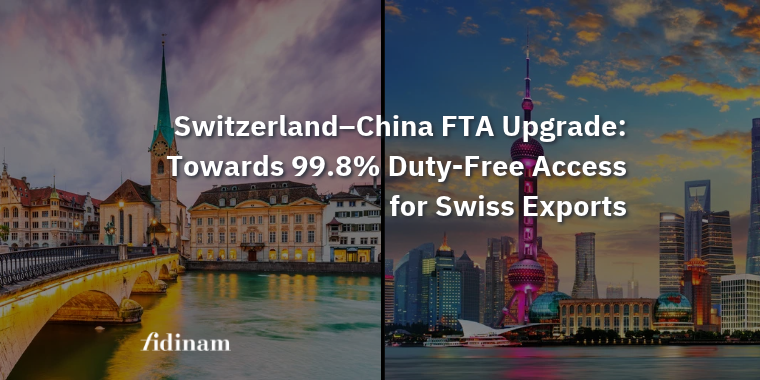
On 30 October 2026, Switzerland and China signed the Protocol upgrading their 2014 Free Trade Agreement (FTA). The Protocol has not yet entered into force and must first complete the ratification process in both countries. According to SECO, the upgrade addresses a long-standing imbalance: while almost all Chinese imports enter Switzerland duty-free, only 53.6% of Swiss exports currently benefit from tariff exemptions when entering China.
Implementation Roadmap
Before ratification, the original 2014 FTA remains fully applicable. Once the upgraded Protocol enters into force, duty-free coverage for Swiss exports is expected to increase immediately from 53.6% to 77.5%. Following a transition period of approximately 5 to 10 years, duty-free coverage is expected to reach 99.8% of Swiss exports, generating an estimated CHF 244 million in annual customs savings, according to SECO.
Sector Impact
The greatest benefits are expected in high-value Swiss industries. At full implementation, watches, pharmaceuticals, chemicals and machinery are expected to achieve almost complete tariff-free access to the Chinese market, although product-specific phase-out schedules will apply.
Modernized Trade Framework
The Protocol introduces electronic EUR.1 certificates and modernises rules of origin. It also expands market-access commitments in selected service sectors, creating additional opportunities for Swiss businesses while simplifying customs administration.
Lessons from the First Decade
Bilateral merchandise trade between Switzerland and China reached CHF 33.5 billion in 2025. Research conducted by the University of St. Gallen, UIBE and Shanghai Customs College highlights that preferential tariffs are only valuable when companies can effectively comply with origin requirements. Swiss chocolate exports, for example, increased significantly after tariff reductions, yet a portion of exports still fails to benefit from available preferences because of documentary and compliance burdens.
What Companies Should Do Now
During the ratification period, businesses should review product classifications against the new tariff schedules, assess supply-chain compliance with rules of origin, consider Approved Exporter status where appropriate, and evaluate how future tariff reductions may affect commercial strategy and market entry decisions.
Fidinam Perspective
Early assessment of customs, tax and supply-chain implications may help companies maximise the benefits arising from the upgraded framework. Fidinam supports companies in analysing the practical impact of the agreement and structuring cross-border operations accordingly.
For tailored advice on your investment strategy, please contact Fidinam.